A Weeknight Supper Built Around One Shared Dish
A weeknight supper built around one shared dish makes mixed preferences easier to manage, with a simple hosting plan and optional accompaniments.
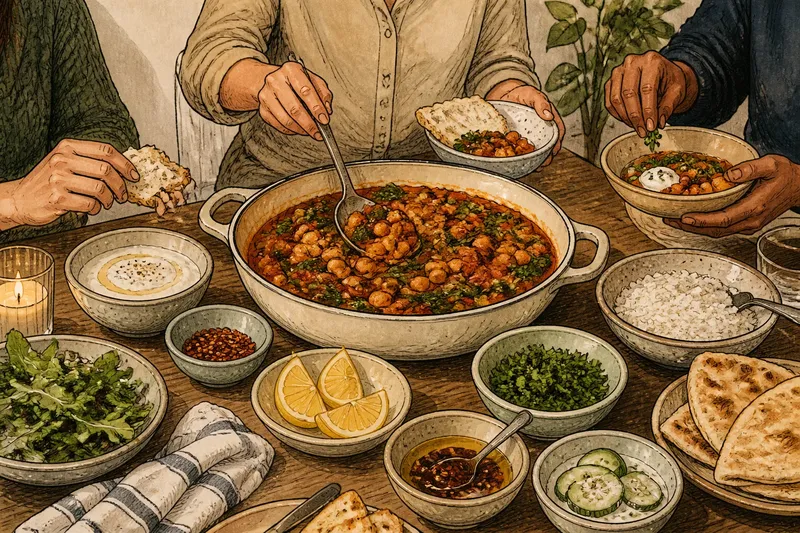
A weeknight supper built around one shared dish works best when the main is satisfying on its own and guests can shape their plates at the table. A pot of chickpeas with tomatoes, greens and warm spices, for instance, can be served with bread, yoghurt and chilli oil on the side, rather than turned into several separate meals.
The trick is to treat the meal as a flexible arrangement, not a test of whether everyone likes every ingredient. If something goes wrong, identify whether the problem is the dish itself, the timing or the way it is served; then make the smallest useful adjustment.
Why does the dish feel too restrictive?
A shared dish can feel limiting when ingredients that are easy to leave out have already been stirred through the whole pot. Strong chilli, olives or a sharp dressing may suit some diners but dominate the meal for others.
Keep the main flavourful but broadly welcoming, and move personal finishing touches into small bowls. Set out chilli flakes, lemon wedges, chopped herbs or grated cheese separately. Think of the main dish as the table’s central lamp: it gives the meal a focus, while smaller choices let each person adjust the light.
For dietary needs, decide which ingredients belong in the central dish and which can stay optional. If a guest has an allergy or another medical dietary requirement, ask what is safe for them and check ingredient labels; do not assume that picking an ingredient out will make a dish suitable.
What if guests want different kinds of food?
Different preferences do not always call for different mains. They often call for a useful base with a choice of accompaniments: rice alongside a vegetable stew, flatbreads beside a tray of roasted vegetables, or boiled potatoes with a lentil dish.
Choose accompaniments that change the experience without creating a second dinner. A bowl of plain rice can make a saucy dish more filling; cucumber with yoghurt can cool it; toasted seeds can add crunch. Keep at least one option free of the main dish’s defining flavour, such as a mild side beside a spicy stew.
Imagine you are serving a tomato and butter bean braise to a friend who avoids dairy and another who dislikes heat. Leave cheese and chilli oil in separate bowls, and offer bread as well as the braise. The expected result is one shared main with clear, voluntary choices, rather than a separate plate for each preference.
Why does the meal become hectic just before serving?
A meal built around one dish can still feel stressful if every accompaniment needs attention at the same time. The usual cause is a menu with too many last-minute jobs: a sauce to whisk, a side to fry and garnishes to chop while the main is ready.
Choose sides that can wait. Bread can be warmed while the main rests; a green salad can be dressed at the table; pickles and olives can go straight from their serving dishes. Before cooking, note which parts need heat and which can be set out early, then do the quiet jobs first.
If the central dish is ready before guests arrive, keep it covered and follow the recipe’s safe holding guidance rather than leaving it at room temperature for an extended period. Serve hot food hot and chilled accompaniments cold, using the storage and reheating directions that apply to the ingredients.
What should you do when the main dish tastes flat?
Flatness often comes from a missing contrast, not a need for more seasoning alone. A rich bean stew may need acid; a bright tomato dish may benefit from a little fat; a soft, creamy dish may need something crisp.
Adjust a small spoonful first, then taste again. Try lemon juice or vinegar for brightness, olive oil or butter for roundness, and toasted breadcrumbs or nuts for texture. Keep these adjustments gradual, especially when the dish is already salted or contains a salty ingredient such as stock, cheese or olives.
Offer the strongest finishing flavours at the table if people may disagree. A squeeze of lemon or spoonful of chopped parsley is easy to add to an individual plate, but difficult to remove once mixed into the pot.
How can you make serving feel relaxed?
Put the main dish where people can reach it, with serving spoons nearby and accompaniments arranged in separate bowls. If the dish is hot, use a trivet and a stable serving vessel; for a crowded table, pass bowls rather than asking everyone to reach across the main.
Make the order of serving obvious without turning it into a formal routine. Place plates at one end, the central dish within easy reach, and breads or sides close by. Let guests choose their own portions, while making sure the main can be served without someone having to lift a heavy pot across the table.
Which questions help you rescue the plan?
What if one guest arrives late?
Keep the central dish covered and follow its storage and reheating guidance; keep cold sides chilled until serving. Set aside a portion before the first round if the dish is difficult to serve neatly later.
What if the main dish is not filling enough?
Add a substantial accompaniment that needs little attention, such as bread, rice or boiled potatoes, if it suits the dish and the diners. A filling side is usually simpler than rushing to cook another main.
What if someone cannot eat the central dish?
Ask about the restriction before planning and offer a clearly suitable alternative when needed. Keep utensils separate where cross-contact matters, and do not describe a dish as safe unless you can verify its ingredients and handling.
What if the table has no room for every bowl?
Put out only the options people are likely to use, then keep the rest on a nearby counter for passing. The shared dish should remain easy to serve, not buried beneath its accompaniments.
How do you choose the right shared dish?
Start with a dish that holds together well and can be served in generous portions: a bean stew, a vegetable curry, baked pasta or a tray of roasted vegetables with grains. Consider whether it remains appealing after a short pause, whether it has a satisfying base, and whether its strongest flavours can be added separately.
For a weeknight supper built around one shared dish, plan one main, one filling accompaniment and one fresh or sharp contrast. That is enough structure to make the meal feel complete, while leaving room for guests to season, assemble and serve their plates in the way that suits them.