The Icebox Before the Home Refrigerator: How It Worked and Changed the Kitchen
The icebox before the home refrigerator kept food cool with delivered ice, careful storage and daily routines. Learn how its design shaped the kitchen.
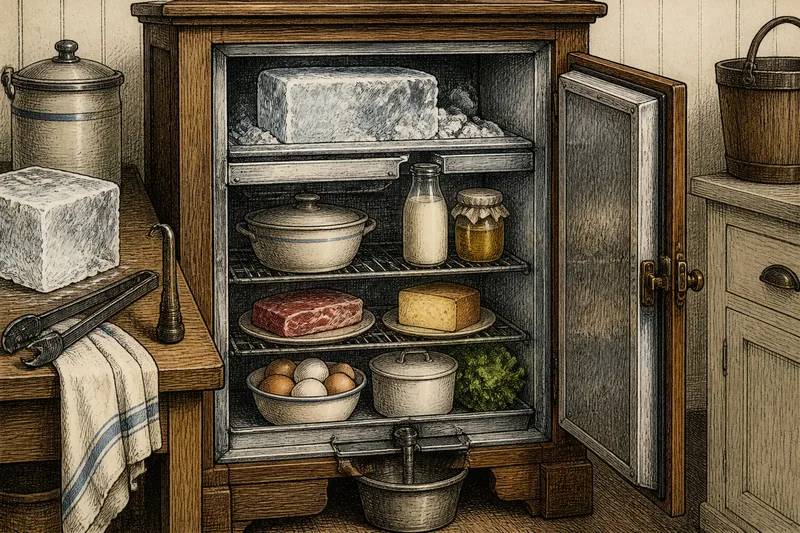
The icebox before the home refrigerator depended on a block of delivered ice, not a motor, and its layout shaped how a household stored and handled food. To understand its place in domestic history, look at the cabinet, the path of melting water and the repeated chores that kept it useful.
What was an icebox?
An icebox was an insulated cupboard built to preserve food with natural ice. It usually had a separate compartment for the ice, with shelves or a food chamber beside or below it. Cold air moved through the interior, while the cabinet slowed the warmth entering from the kitchen.
The name could refer to a range of cabinets, from plain wooden boxes lined with metal to more finished furniture made for a household kitchen. Materials varied, but the working idea remained familiar: keep ice in an enclosed space and arrange food where the resulting cool air could reach it.
Unlike a modern refrigerator, an icebox did not create cold on demand. Its usefulness depended on having ice available and on managing the cabinet so that food stayed cool without wasting space or letting meltwater escape.
How did the icebox keep food cool?
Ice absorbed heat as it melted. The ice compartment was commonly placed above the food space, allowing cooler air to descend through the cabinet while warmer air rose. The cabinet’s insulation slowed heat exchange, but the temperature still shifted with the amount and condition of the ice, the room and how often the door was opened.
Some designs used a circulation opening or flue to help air move through the cabinet. Interior surfaces were often metal, which could be wiped clean and directed meltwater towards a drain. Details differed between makers and models, so there was no single standard arrangement.
Think of the icebox like a cool corner made inside a cupboard: the ice supplied the cold, and the cabinet helped keep it from spilling quickly into the room. It could not hold every part of its interior at an identical temperature, so where food sat mattered.
What were the main parts of an icebox?
The ice compartment sat at the top or at one side, separated from the food by a wall or shelf. A drip pan or drain carried away meltwater; some cabinets directed it into a removable vessel that needed emptying. Shelves, racks and small compartments helped keep containers apart and made the available space easier to use.
Exterior cabinets might be wood, while the inside used materials such as zinc, tin or other metal linings. Insulating material was packed between the inner lining and outer case. A fitted door, often with a latch or seal, limited the flow of warm air each time someone reached in.
These components made the icebox both a storage cabinet and a small water-management system. A blocked drain or neglected pan could create a mess even if the ice itself was doing its job.
Where did households get the ice?
In places with commercial ice delivery, an ice wagon brought blocks to homes and businesses. The household ordered or requested an amount suited to its needs, and the delivery worker carried the block to the icebox, often using tongs or an ice pick to handle it. In other settings, people relied on ice harvested in cold weather and stored for later use, or on locally available supplies.
Access was uneven. Delivery depended on local infrastructure, household means, climate and the availability of ice. A family without dependable supply had to rely on other methods of keeping food, such as using a cool cellar or preparing perishable ingredients promptly.
Ice was not simply a one-off purchase that solved storage. A household had to notice when the supply was running low, arrange more and make room for the new block. The icebox tied food storage to a service outside the kitchen.
How did people arrange food inside it?
Households had to distribute food according to the cabinet’s colder and less-cold areas. Items needing the coolest space were placed near the ice compartment, while foods that could tolerate a milder temperature might sit farther away. Containers also mattered: covered dishes helped protect food from drips, odours and contact with other items.
Keeping raw ingredients separate from ready-to-eat food was a useful practice, as it is in any shared storage space. Because a household could not assume that every shelf stayed equally cold, people often learnt the cabinet’s quirks through ordinary use and adjusted placement accordingly.
Say a household receives a fresh block while a covered pot and a jug already occupy the upper shelf. The person arranging the cabinet might move the pot to a lower shelf and place items needing more cooling nearer the ice; the visible result is a clearer path for cold air and less crowding around the ice compartment.
What daily routines did an icebox create?
The icebox added a sequence of small jobs to kitchen life: check the ice, keep the drain or pan clear, wipe spills, and decide what to use before it spoiled. Someone also had to coordinate delivery and carry the block into place. These tasks made food storage a visible household responsibility rather than a quiet appliance function.
Meal planning could follow the state of the ice and the food already inside. A cook might choose ingredients that needed using sooner, or avoid opening the door repeatedly while preparing a meal. The cabinet encouraged attention to inventory because food was stored in a limited space whose cooling supply gradually diminished.
Cleaning mattered, too. Meltwater and food spills could leave unpleasant odours or residue, so shelves and pans needed regular attention. The icebox did not remove the work of preserving food; it shifted that work into a pattern of checking, arranging and tending.
Why did the icebox change the kitchen?
The icebox brought a dedicated cold-storage cabinet into the domestic kitchen and made ice delivery part of household provisioning. It could support keeping certain foods for longer than a warm cupboard allowed, but it did not make food care effortless. Its limits were built into its design: finite ice, uneven cooling, drainage and the need to open the door sparingly.
Its presence also affected the room’s organisation. A cabinet needed a suitable place, access for delivery and enough space for the door and drainage arrangements. The icebox was furniture as well as equipment, and its position could influence how people moved between storage, preparation and serving areas.
For a household, the important difference was not simply colder food. It was a new routine in which the condition of the ice and the arrangement of the cabinet shaped what could be stored and when it should be used.
How does an icebox differ from a refrigerator?
An icebox used a replaceable block of ice as its cooling source. A home refrigerator produces cold mechanically and, once installed and supplied with power, does not require a delivery worker to replenish a block. The shift changed both the source of cooling and the rhythm of kitchen upkeep.
Refrigerators brought more consistent, controllable storage in ordinary household use, while iceboxes required people to respond to the melting ice and cabinet conditions. That comparison should not turn the icebox into a failed refrigerator: it was designed for a different system of supply and domestic work.
What do readers often ask about the icebox?
Did every icebox have a drain?
Many designs provided a route for meltwater, but the arrangement varied. Some used a drain and others relied on a removable pan, which had to be emptied and cleaned.
Could an icebox keep every food equally cold?
No. The position of the ice and the movement of air created cooler and warmer areas, and opening the door let in heat. Households arranged food with those differences in mind.
Was ice delivered to every home?
No. Ice delivery depended on local services and supply, and some people stored harvested ice or used other ways to keep food cool. The household’s options were shaped by where it lived and what resources were available.
Why did people need to empty the drip pan?
As ice melted, water collected in a pan or flowed towards a drain. Emptying a pan prevented overflow, while keeping either arrangement clean helped limit dampness and unpleasant smells.
The icebox before the home refrigerator is easiest to picture as a cabinet that demanded attention: ice had to arrive, food had to be placed thoughtfully, and water had to go somewhere. That practical combination explains why its history belongs not only to kitchen technology but also to the daily organisation of meals and household work.