Why Resting Dough Changes Its Feel
Why resting dough changes its feel: learn the touch cues that show when flour has absorbed moisture and dough is ready to shape.
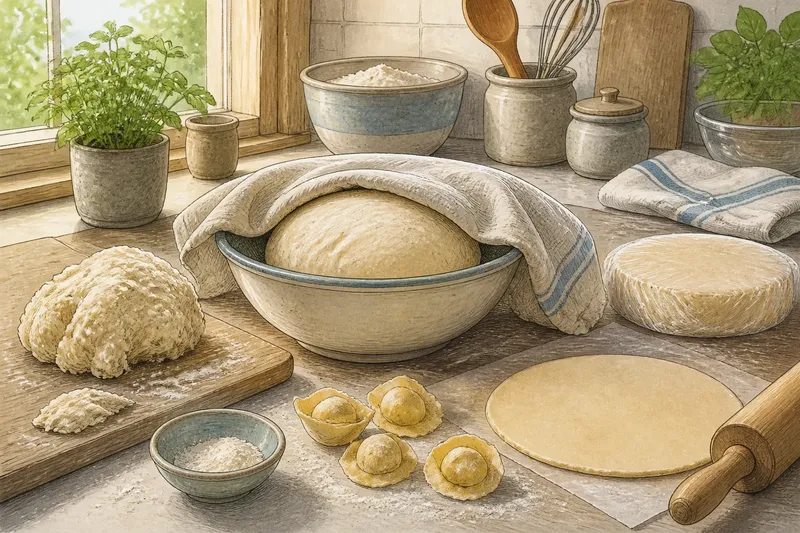
Why resting dough changes its feel becomes clear when a freshly mixed mass turns from ragged and grabby to smoother and more willing to hold together. That shift is useful in bread, pastry and many other doughs, but the right pause depends on the ingredients and the job ahead.
What changes while dough rests?
At first, flour and liquid may not be evenly joined. A rough dough can feel dry in one spot and sticky in another because some flour has absorbed moisture while other patches remain less hydrated. A pause gives that moisture time to spread through the mixture.
Flour proteins also begin forming a connected structure when they meet water. Mixing starts that process; resting lets the dough settle into it. The result may feel more cohesive, even if you have not added flour or worked it further.
Think of a new dough like a tangled ball of string: pulling at it immediately can make the tangle tighter, while giving it a moment to settle can make its shape easier to handle. The comparison has limits, but it captures why extra mixing is not always the best response to resistance.
Resting does not make every dough elastic. A shortcrust mixture, for instance, is usually meant to remain tender rather than springy. The useful change is the one that suits the next task: less crumbling for a pastry base, or more stretch for a loaf.
What can your hands tell you?
Touch is more informative when you notice several cues together rather than judging by stickiness alone. Flour type, water content, fat, sugar and the temperature of the kitchen all influence how a dough feels.
- Ragged edges: If the dough breaks into rough fragments when pressed together, moisture may not yet be evenly distributed. Cover it and give it a pause before deciding whether it needs more liquid.
- Surface tack: A lightly tacky surface can be normal in bread dough. If it clings heavily to your fingers, first check whether it becomes easier to handle after resting; adding flour straight away can make the finished dough firmer than intended.
- Resistance to a gentle pull: Bread dough may stretch a little before it tears. If it snaps back strongly, more rest can make shaping less of a struggle, though dough composition and mixing also matter.
- Cracking at the edge: A pastry round that splits as you bend or roll it may need time for moisture and structure to even out. Press the cracks together gently rather than forcing the dough into a larger shape.
- Loss of shape: If a piece slumps as soon as you form it, the dough may be soft, warm or insufficiently developed. A pause can help, but it cannot correct every cause.
Use a light touch: press, lift or fold a small section, then stop. Repeatedly squeezing the dough changes it while you are trying to assess it, much like judging a cushion by punching it several times.
How should you choose a resting place?
Cover dough so its surface does not dry out. A clean, slightly damp cloth can suit a bowl of bread dough, while a reusable cover or food-safe film helps keep pastry protected. Keep the covering from pressing hard into a soft surface.
Where the dough rests matters as much as how it is covered. A cool place slows change; a warm room generally speeds it up. For doughs that need chilling, use the refrigerator as directed by the recipe, especially when the mixture contains butter that should remain firm.
Choose a pause by checking the dough, not by treating a time written for another kitchen as a rule. A dry room, a different flour or a cooler bowl can alter how quickly the mixture settles. If the recipe specifies a rest for a particular result, use it as the starting point and look for the stated texture or handling cue.
For dough with yeast, resting also gives fermentation time to produce gas. That is a different change from moisture distribution and gluten relaxation, even though both happen during a pause. Follow the recipe’s fermentation cues rather than assuming that a dough is ready simply because it feels softer.
Which doughs benefit from a pause?
Bread dough: A pause after initial mixing can make the mass easier to fold or shape. Some bread methods use a rest before more vigorous mixing; others rely on a longer rise. Keep those purposes distinct, and avoid treating a brief rest as a substitute for fermentation.
Pastry dough: Chilling a pastry dough helps firm its fat and can make it less sticky to roll. It also gives the flour time to take up moisture. If it emerges very firm, let it soften just enough to roll without cracking rather than warming it until the fat turns greasy.
Pasta dough: Resting can make a firm dough less resistant to rolling and help it hold together as sheets are made. Keep it covered so the outside does not dry into a skin that later tears or leaves hard flecks in a thin sheet.
Flatbread and dumpling dough: A short pause can make portions easier to roll or seal. The useful cue is a smoother surface and less spring-back, not an expectation that every dough should feel soft or loose.
How can you tell whether to wait or adjust?
Should sticky dough get more flour straight away?
Not necessarily. Cover it and wait briefly, then handle a small area again; flour may absorb moisture and reduce the grabby feel. If it remains unmanageable, make only the adjustment your recipe allows, since extra flour can change tenderness and texture.
Why does dough spring back after rolling?
Its structure may still be tense from mixing or handling. Cover the dough and let it relax before rolling again, using gentle pressure rather than forcing it to the desired shape.
Can dough rest for too long?
Yes, depending on the dough and conditions. Yeasted dough can continue fermenting, while uncovered dough can dry and form a tough skin; pastry can also soften if it warms. Use the recipe’s handling and storage directions, and check the dough rather than leaving it unattended for an open-ended pause.
What if the dough still tears after resting?
Check whether it is dry, cold or being stretched beyond its natural range. Let a chilled dough become workable, or press dry-looking cracks together with a small amount of liquid only if the recipe permits. If the dough is meant to be tender, do not keep kneading in pursuit of elasticity.
What does a useful pause look like?
Say you mix a small batch of flatbread dough and find that it clings to your fingers and shrinks as you roll it. Cover the bowl, leave it in a cool part of the kitchen for a short while, then press and roll one portion again. You may notice a smoother surface and less spring-back; if not, check the recipe’s proportions and method before adding flour.
Keep notes only when they answer a practical question: which flour you used, whether the room felt cool or warm, and what changed under your fingers. The next time, use those observations as a guide, not as a fixed timetable. That is the central lesson of why resting dough changes its feel: a pause gives the ingredients time to settle, while your hands tell you whether the dough is ready for its next task.
Where the recipe, product label or manufacturer instructions specify a method, follow those directions; doughs vary too much for one schedule to fit every mixture. For food-safety questions involving ingredients that require careful storage, use appropriate local guidance.