Fresh, Dried or Frozen Herbs: Choose by the Job
Fresh, dried or frozen herbs each suit different cooking jobs. Match their texture, flavour and timing to the dish for better seasoning with less waste.
Fresh, dried or frozen herbs can all season the same dish, but they do not do the same job. Fresh herbs often bring vivid aroma and a distinct texture; dried herbs are concentrated and ready to infuse; frozen herbs offer much of fresh herbs’ character with less preparation. Choose by when the herb enters the cooking and what you want it to contribute.
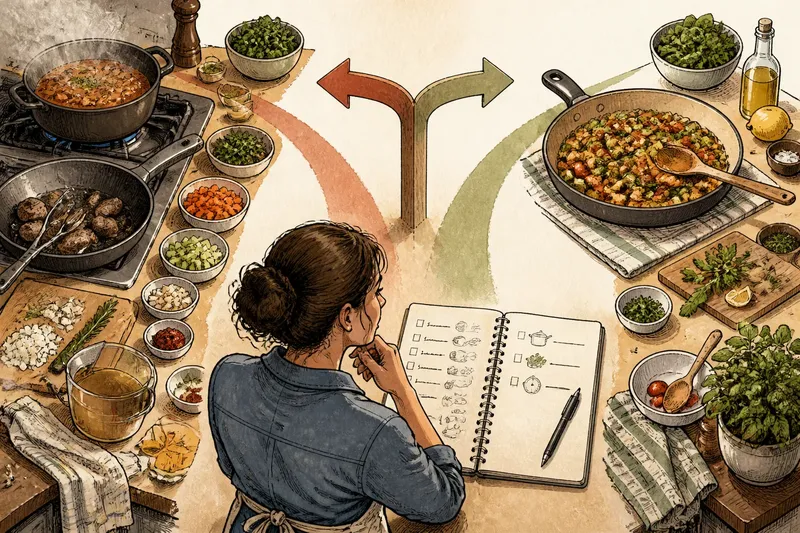
Think of herbs as having two roles: they can build flavour into a dish, or provide a fresh accent at the end. A slow-cooked stew needs herbs that can release flavour over time, while a bowl of tomato salad may depend on tender leaves that remain recognisable. Once you identify the role, choosing a form becomes much easier.
What changes when herbs are fresh, dried or frozen?
Fresh herbs contain moisture and usually have a bright, leafy aroma. Their flavour can be delicate, grassy, citrusy or peppery, depending on the herb. Because leaves and stems remain intact, they can also contribute colour and texture, especially when scattered over food just before serving.
Drying removes much of that moisture, leaving the herb compact and easy to store. The flavour becomes more concentrated, though it may also shift: dried oregano can taste deeper and more earthy than fresh oregano, while dried parsley often loses the clean, green quality people expect from its fresh leaves. The dried form works well where flavour can mingle with oil, stock, tomatoes or other liquids.
Freezing preserves herbs while they are still moist. The leaves often soften and darken as they thaw, so they rarely make an attractive garnish, but their flavour can remain useful in cooked dishes. Frozen herbs are often sold chopped in portions or packed as whole leaves; either can save washing and chopping when a recipe needs herbs stirred into a sauce or soup.
These are tendencies, not rules. The age of dried herbs, how they were stored, the variety and the way a dish is cooked all affect the result. If an open jar smells faint or dusty rather than clearly herbal, expect it to contribute less aroma than a fresher supply.
Which form suits the cooking time?
Long cooking gives sturdy herbs time to infuse a dish. Dried bay leaf, thyme, rosemary and oregano are useful in braises, bean pots, tomato sauces and soups. Add them early enough to release flavour, then taste as the dish cooks; a tough bay leaf is usually removed before serving.
Fresh woody herbs can also work in a simmering pot. A sprig of rosemary or thyme can season a sauce gradually, while its stem makes it easy to lift out. If you want the leaves themselves in the finished dish, strip and chop them finely, since a large piece of rosemary can feel hard and resinous to chew.
Frozen herbs generally suit brief cooking or a final stir into hot food. Chives, coriander leaves, parsley and dill can lose their fresh texture after thawing, but still add useful flavour to warm potatoes, soups, omelettes or a pan sauce. Add them near the end if you want their flavour to stay distinct; add them earlier if you want it to blend into the dish.
Fresh tender leaves—such as basil, mint, coriander and parsley—often make their strongest impression at the end. Stir them through just before serving or scatter them on top. A long simmer can dull their fragrance and turn their colour dark, which may be fine in a cooked sauce but disappointing in a dish meant to taste fresh.
What role should the herb play?
For a background note, use a form that can blend in: dried thyme in lentils, frozen parsley in soup, or a fresh sprig of rosemary in a pot of beans. For a prominent, fresh-tasting finish, use newly chopped leaves or a good frozen herb added at the last moment. If the herb is meant to be seen and felt, fresh is usually the better choice.
Texture matters as much as aroma. Fresh mint leaves can be torn into a salad, while dried mint suits a dressing or cooked dish where crisp leaf texture is not wanted. Frozen dill can season a creamy sauce, but its softened leaves are less suited to a dish where the dill should look feathery and fresh.
Some herbs are particularly associated with a certain form. Dried oregano is convenient for pizza, roasted vegetables and tomato-based dishes. Fresh basil makes a lively finish for sliced tomatoes or pasta, while frozen basil can be practical in a cooked tomato sauce. These pairings are starting points, not restrictions: let the dish’s texture and cooking time decide.
How should you adjust dried herbs?
Dried herbs are more concentrated by volume than fresh leaves, so substituting them spoon for spoon can make a dish taste dusty or overly herbal. Use less dried herb as a starting point, then adjust after it has had time to infuse. For a recipe that specifies fresh herbs, consider whether it relies on their bulk or colour; dried leaves cannot replace a large handful of fresh garnish.
Crushing dried leaves lightly between your fingers as you add them can release their aroma. For a dish with fat, such as olive oil or butter, stirring the herb into that fat helps distribute its flavour. Avoid adding dried herbs only at the very end of a quick dish if they need time to soften and taste less raw.
There is no single conversion that works perfectly for every herb. A recipe’s stated quantity is a useful starting point, but the strength of the jar and the herb’s role matter. Taste before adding more, particularly with assertive rosemary, sage or oregano.
How do you choose herbs for common dishes?
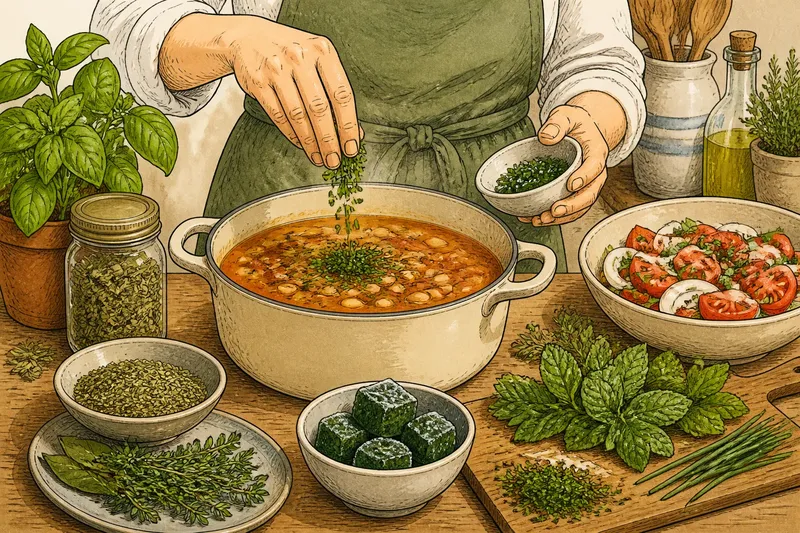
Imagine you are making a tomato and white bean soup that will simmer gently. Dried oregano can go in near the start to flavour the broth, while a little frozen parsley stirred in just before serving can add a greener note. If you want visible, tender parsley leaves on top, choose fresh instead; the result should have a brighter finish and a more noticeable leafy texture.
- Soup or stew: Use dried thyme, oregano or bay early in the cooking; add tender fresh or frozen herbs near the end.
- Salad or uncooked sauce: Choose fresh leaves when their aroma and texture are central. Dried herbs can work in a dressing if they have time to soften.
- Quick pan sauce: Stir in fresh chopped herbs at the end, or use frozen herbs for an easy addition. Dried herbs suit a sauce that will simmer briefly.
- Roasted vegetables: Dried rosemary or oregano can season the vegetables before roasting; fresh parsley or mint can provide a lively finish.
- Herb-heavy dish: Use fresh herbs when the dish depends on generous leaves and their texture. Frozen herbs can contribute flavour, but may not provide the same appearance or bite.
These choices can be mixed. A dish might use dried thyme to build its base and fresh parsley for contrast, just as a room can have both a steady background and a bright focal point. Keep the roles distinct rather than adding several forms of the same herb automatically.
Which herb questions come up most often?
Can dried herbs replace fresh herbs?
Often, particularly in cooked dishes where the herbs have time to infuse. Use a smaller amount at first, and do not expect dried leaves to supply the colour, volume or soft texture of fresh herbs.
Can frozen herbs be used without thawing?
In many cooked dishes, frozen herbs can go straight into the pot or pan. For a cold dip or dressing, thaw them first if the recipe needs an even texture, and drain away excess liquid if the herbs release it.
Should fresh herbs be added before or after cooking?
Sturdy sprigs can season food during cooking, while delicate leaves usually keep more aroma and colour when added near the end. If the leaves are intended as a garnish, add them just before serving.
How can you tell whether dried herbs are still useful?
Rub a pinch between your fingers and smell it. If the aroma is faint, replace the jar or use another form rather than adding a large amount in an attempt to compensate.
How should you keep each form ready to use?
Store dried herbs in tightly closed containers, away from heat, steam and direct sunlight. A cupboard beside the hob may be convenient but exposes jars to warmth and moisture; choose a cooler, dry place instead. Keeping the original label also helps you distinguish similar-looking leaves and check any storage advice from the producer.
Fresh herbs usually last better when kept clean and dry until needed. For bunches with long stems, trim the ends and stand them in a glass of water in the fridge or on the counter, depending on the herb and the conditions in your kitchen; basil can be sensitive to cold. Alternatively, wrap leaves loosely in a clean, slightly damp cloth and refrigerate. Remove slimy or damaged leaves before they affect the rest.
Keep frozen herbs sealed in the freezer and take out only what the dish needs. A small portion is easier to use than a large block that must be thawed and refrozen. If freezing herbs at home, wash them, dry them thoroughly and chop or portion them in a way that suits the dishes you cook; herbs frozen with a little oil can be useful for cooked sauces, but are not a substitute for fresh leaves in an uncooked salad.
For fresh, dried or frozen herbs, the useful question is not which form is best overall, but what you want the herb to do at that point in the recipe. Match robust forms to longer cooking, tender leaves to a fresh finish, and convenient frozen portions to dishes where flavour matters more than pristine texture. Where a packet gives storage or use directions, follow its label.